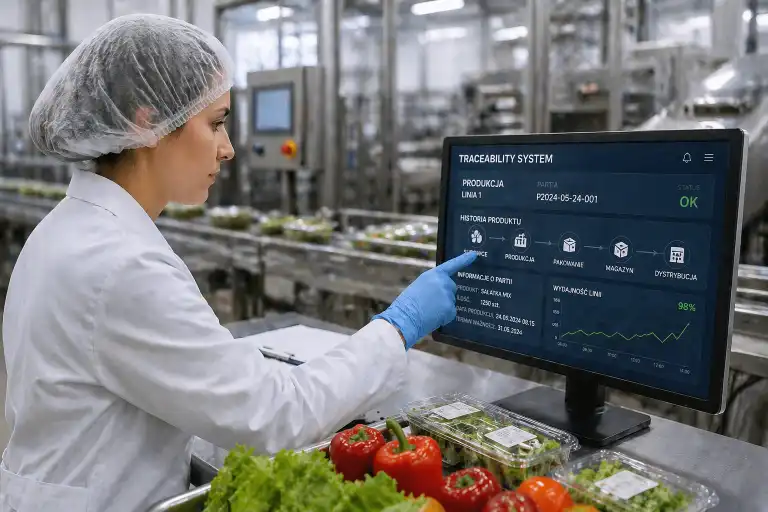
When Is Traceability in the Food Industry Necessary? 7 Warning Signs
In today’s food industry, traceability is no longer a “nice to have” – it has become a fundamental requirement. Increasing regulatory pressure, quality standards, and customer expectations mean that manufacturers must maintain full visibility over their production processes.
However, many companies only realize the importance of traceability after encountering serious operational or quality issues. Below are seven clear warning signs that indicate it may be time to implement a traceability system.
1. You cannot identify defective batches quickly
Without a proper traceability system, isolating a problematic batch becomes time-consuming or even impossible. This often leads to recalling more products than necessary.
2. Customer complaints are difficult to investigate
If you cannot trace a product’s history, identifying the root cause of issues becomes extremely challenging. This affects both quality control and customer trust.
3. Lack of end-to-end product visibility
Traceability enables full transparency – from raw materials to finished goods. Without it, production remains partially uncontrolled.
4. Data is stored manually (Excel, paper)
Manual data entry increases the risk of errors and inconsistencies. Modern traceability systems collect production data automatically and in real time.
5. Difficulties during audits and inspections
Compliance with standards such as HACCP requires clear and reliable data. Without traceability, audit processes become stressful and risky.
6. Excessive manual data handling
Operators spending time entering data manually is inefficient and error-prone. Automation significantly improves both accuracy and productivity.
7. Limited control over raw materials
Knowing the origin and usage of raw materials is critical in food production. Without traceability, this level of control is simply not achievable.
What does a traceability system provide?
A properly implemented traceability system enables:
- full tracking of production batches
- real-time data collection
- fast identification of issues
- compliance with industry regulations
- reduction of waste and production losses
What are the risks of not having traceability?
Operating without traceability can result in:
- large-scale product recalls
- financial losses
- regulatory penalties
- damage to brand reputation
Conclusion
If your production process shows even a few of the warning signs above, implementing a traceability system should be a priority.
Every production environment is different, which is why the system must be tailored to your specific processes and requirements.
Contact us
Would you like to assess whether traceability is necessary in your production?
Schedule a free consultation and discover how we can support your production process.