SystemSmart integrated Siemens PLC controllers with a dedicated OPC server for a BMW production line. The project also covered HMI operator panels and the connection between the machine-control layer, a traceability system, the production database and higher-level applications. The engineering objective was to establish a consistent route for production data without merging the responsibilities of control, visualisation and information systems.
This case study explains the confirmed project scope, the role of each architecture layer and the way PLC–OPC integration supports access to production information. It does not introduce device models, protocol versions, signal counts or performance figures that have not been confirmed in the available project materials.
PLC and OPC server integration — confirmed project scope
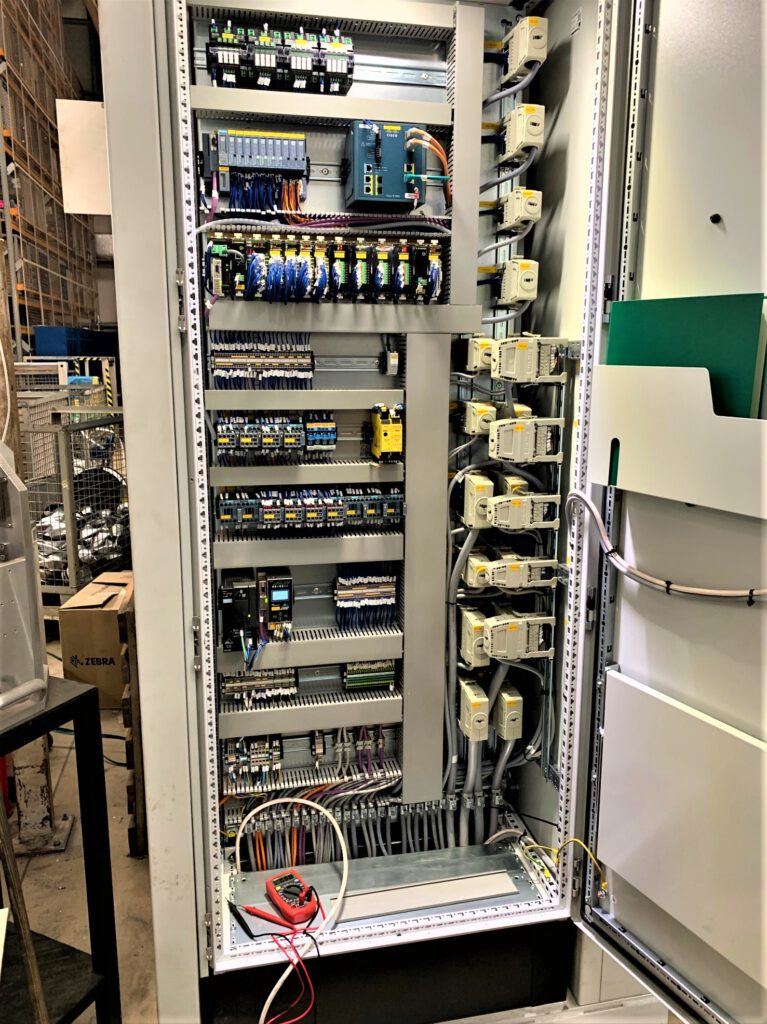
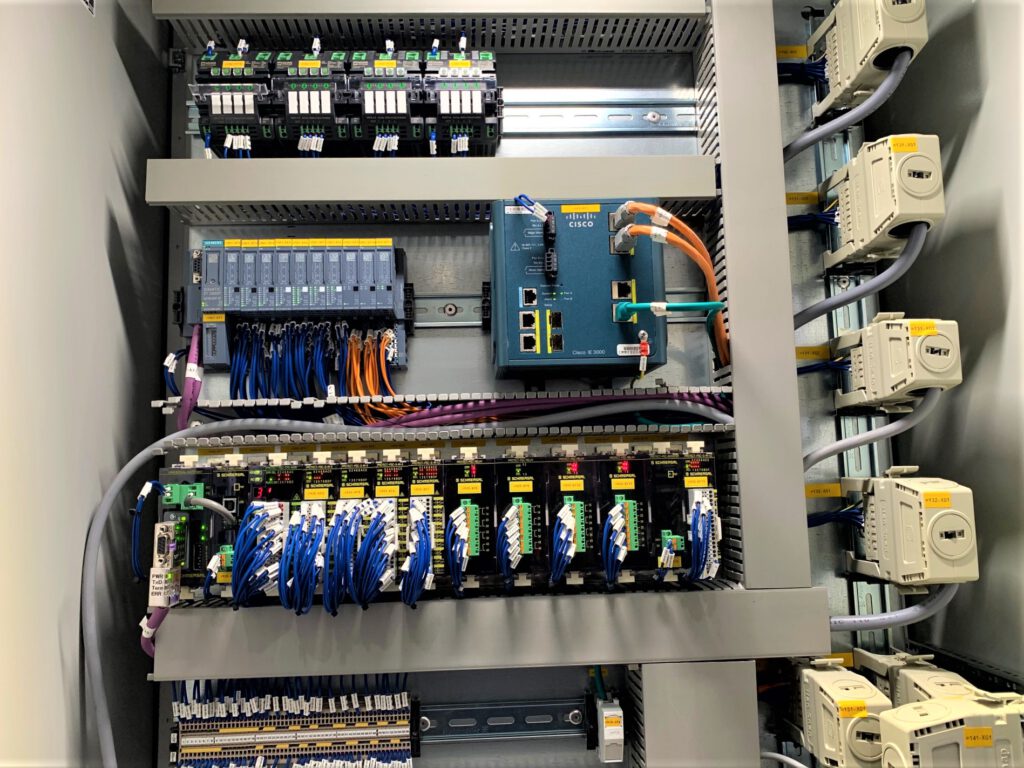
SystemSmart supplied and programmed Siemens PLC controllers and HMI panels. The control layer was connected to a dedicated OPC server that exchanged selected data with production equipment, a database and higher-level systems.
The publicly confirmed scope includes:
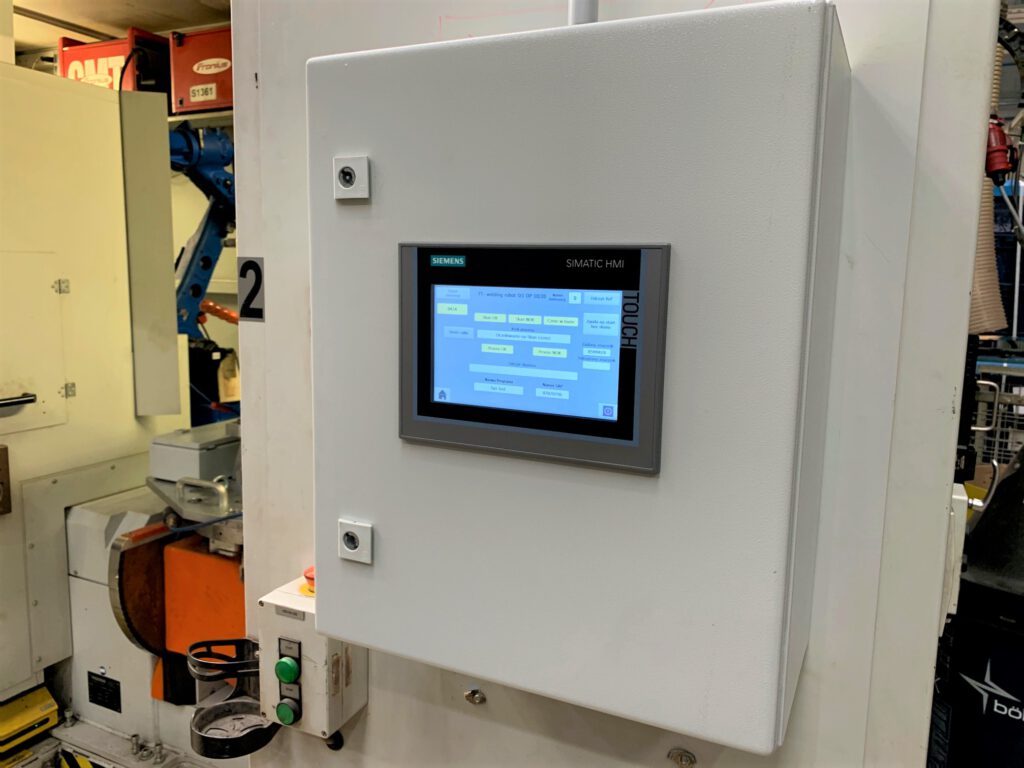
- delivery of Siemens PLC controllers and HMI operator panels;
- development of the PLC and HMI applications;
- integration of the controllers with a dedicated OPC server;
- data exchange with production equipment, the database and higher-level systems;
- connection of the automation layer to the traceability environment;
- access to data used for process monitoring and product-history analysis.
Production data architecture
The diagram separates the responsibilities of the individual layers. PLC controllers execute the machine logic and communicate with production devices. The OPC server acts as the communication intermediary for selected process data, while HMI panels provide operators with information required at the workstation.
Role of Siemens PLC controllers and HMI panels
The Siemens PLC controllers execute the control logic and exchange information with devices operating on the production line. Their applications were prepared to cooperate with the dedicated OPC server and the remaining elements of the system architecture.
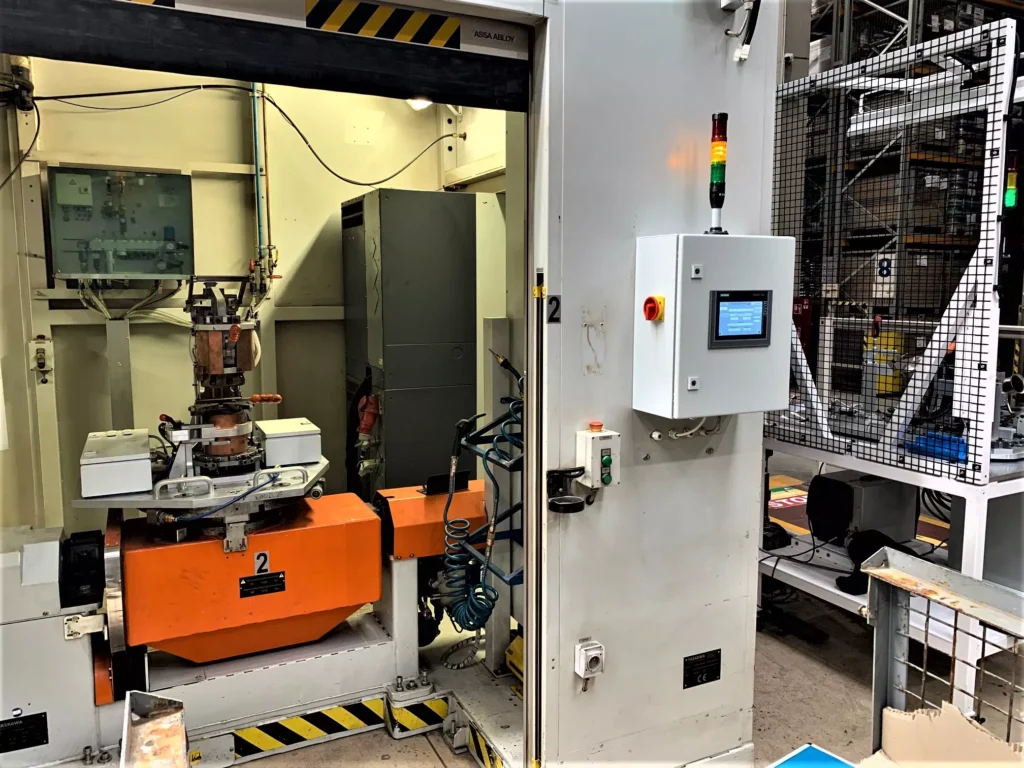
HMI panels make process information available directly at the operator station. Keeping machine control, operator visualisation and communication with higher-level systems in distinct layers makes the solution easier to understand and extend.
Why was an OPC server used?
The OPC server provides a shared communication layer between PLC controllers and production software. Instead of building a separate interface for every application, selected PLC data can be made available in a structured way to the production database, traceability platform and other higher-level systems.
In this project, the OPC server enabled central access to process information and provided a foundation for further development of the automation environment. The data scope was aligned with the requirements of the production applications and the traceability layer.
Connecting industrial automation with traceability
The traceability layer uses data supplied by the automation system to record information about production operations and product history. Process engineers and technologists gain access to current references and production records, enabling them to review operation timing and analyse how an individual product moved through the process.
The PLC remains the source of information directly related to machine operation, while traceability stores and uses that information in a wider production context. The product layer is described separately on the TraceSmart traceability system page.
Confirmed technical outcomes
The available project materials confirm the following technical outcomes:
- communication between Siemens PLC controllers and the dedicated OPC server;
- data exchange between production equipment, the database and higher-level systems;
- central access to selected process information;
- production data available for machine monitoring and analysis;
- connection of automation data with product history in the traceability system;
- an architecture that can support further automation-system development.
What does this project demonstrate?
The implementation shows how machine control can be connected to information systems while preserving clear ownership of each function. PLC controllers run the machine logic, HMI panels support operators, the OPC server organises data exchange, and the database and traceability applications use production information for monitoring and genealogy.
A similar architecture can be applied in other plants, but its scope must follow an assessment of the installed controllers, industrial networks, source-program availability, data addressing and higher-level system requirements. SystemSmart delivers industrial automation systems and PLC, HMI and production-data integration projects.
Frequently asked questions
What is the role of an OPC server in PLC integration?
An OPC server acts as an intermediary between PLC controllers and applications that use production data. It makes selected variables available to higher-level systems and reduces the need to develop a separate interface for every data consumer.
Does an OPC server replace the PLC?
No. A PLC executes the control logic and operates process equipment. The OPC server exchanges data with other systems. The two layers serve different purposes.
What production data can be transferred from a PLC?
The scope depends on the process and project requirements. Typical categories may include equipment states, alarms, operation parameters, product identifiers and reporting data. The exact variable list should be defined in an interface matrix.
Can PLC–OPC integration be added to an existing line?
Yes, provided that the controllers, networks and higher-level systems support a suitable interface. Before implementation, the existing architecture, source-program access and commissioning conditions should be reviewed.
Discuss your PLC and production-data integration
If you are planning to connect PLC controllers with an OPC server, SCADA, a database or a production-management application, prepare information about the installed controllers, networks, data sources and expected data consumers. This provides the basis for defining the architecture, test scope and commissioning approach.
Contact SystemSmart to discuss an industrial automation integration project.
Project gallery